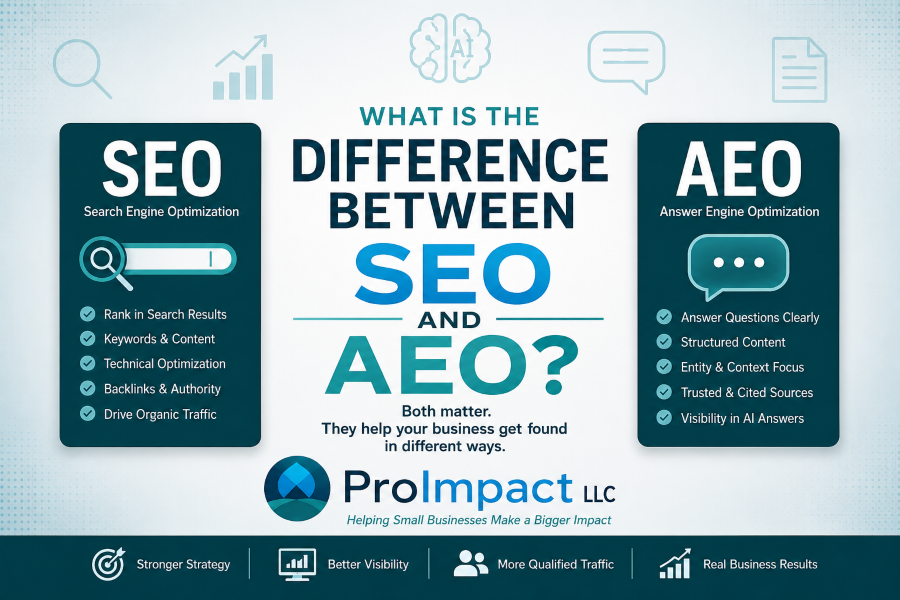
What Is the Difference Between SEO and AEO?
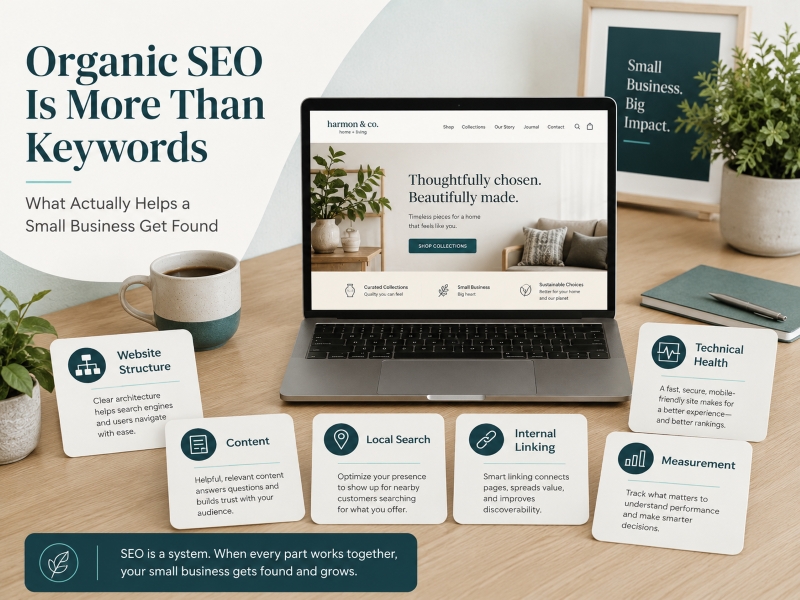
Search engine optimization and answer engine optimization are closely connected, but they are not exactly the same thing. SEO helps a website compete in traditional search results. AEO builds on that foundation by making useful information easier for search engines and AI-powered answer systems to understand, retrieve, summarize, and potentially cite.
The practical difference between SEO and AEO is where the information may appear. SEO focuses on helping pages rank and earn visits from search results. AEO focuses on making content clear, specific, trustworthy, and easy to use when a search engine or AI system generates a direct answer. For a small business, AEO should usually be treated as an extension of good SEO rather than a replacement for it.
Small-business owners already have enough marketing acronyms to deal with, so the arrival of another one can make search visibility seem more complicated than it needs to be. SEO has been part of website marketing for years. Now AEO — Answer Engine Optimization — is showing up in conversations about Google AI Overviews, ChatGPT, Microsoft Copilot, Perplexity, and other tools that can answer a question without presenting a traditional page of ten blue links first.
That change is real, but it does not mean everything businesses have learned about organic search suddenly stopped mattering. An AI system still needs useful information to work with. Search engines still need to crawl and understand websites. Customers still need credible service pages when they want to investigate a company, compare options, see previous work, or make contact.
The more useful question is therefore not whether a small business should choose SEO or AEO. It is how the two fit together — and whether the website is structured well enough to support both.
SEO vs AEO: What Actually Changes?
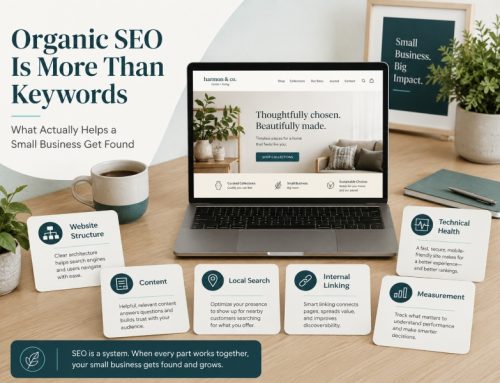
Traditional SEO is primarily concerned with helping a webpage become a relevant and competitive search result. That includes making sure the page can be crawled and indexed, clearly explaining the subject, using sensible headings and metadata, creating strong service content, building internal relationships between pages, and demonstrating enough relevance and credibility to compete with other available results.
AEO looks at many of those same ingredients from a slightly different direction. Instead of asking only whether a page can rank for a search, it also asks whether the information on that page can be confidently understood and used as part of an answer.
Search Engine Optimization
Helps search engines understand, index, rank, and present webpages for relevant searches.
- Clear service and topic pages
- Search intent and relevance
- Page titles and metadata
- Internal linking
- Technical crawlability and indexing
- Content depth and usefulness
- Authority and trust signals
Answer Engine Optimization
Helps answer systems identify clear information that may be useful when responding directly to a question.
- Direct answers to real questions
- Clear definitions and explanations
- Logical page structure
- Specific, self-contained passages
- Consistent business and topic context
- Accurate supporting information
- Content that is easy to interpret
AEO does not make SEO obsolete. If anything, AI-powered answers make a clear, useful, technically sound website even more important.
Why SEO and AEO Share the Same Foundation
It is easy to make AEO sound like an entirely new branch of marketing with a completely different set of rules. For most small businesses, that would be misleading.
Consider a local service company with one thin services page listing six different things it does. The page has very little explanation, no useful supporting articles, weak headings, few internal links, generic image information, and almost no detail about who the company serves or where it works.
That page presents a traditional SEO problem because search engines have limited information for understanding which service should rank for which search. But it also presents an AEO problem. If an answer system is trying to understand whether the company provides a particular service, what that service includes, or who it is appropriate for, the website has not given it much usable information.
Strengthening the website helps both. Individual service pages can explain important offerings clearly. Helpful articles can answer narrower customer questions. Internal links can establish relationships between the articles and the services they support. Accurate business information can reinforce who the company is and where it operates.
That is why ProImpact's approach to organic SEO and content strategy starts with the website itself rather than a collection of disconnected optimization tricks.
AEO Changes How We Think About Helpful Content
One of the most useful changes brought by answer-driven search is that it encourages businesses to think more carefully about the questions people are actually asking.
A traditional service page might focus primarily on a phrase such as “Tucson website design.” That can still be an important commercial search. But potential clients also ask questions such as:
How much should a small-business website cost?
How do I know whether my website needs to be redesigned?
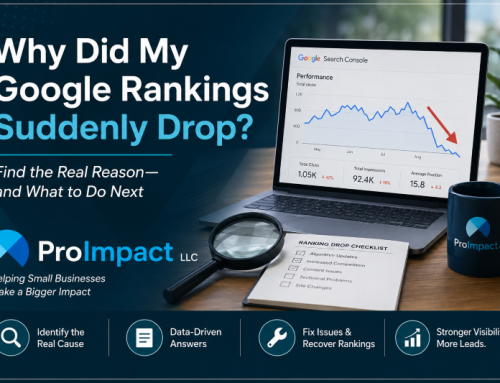
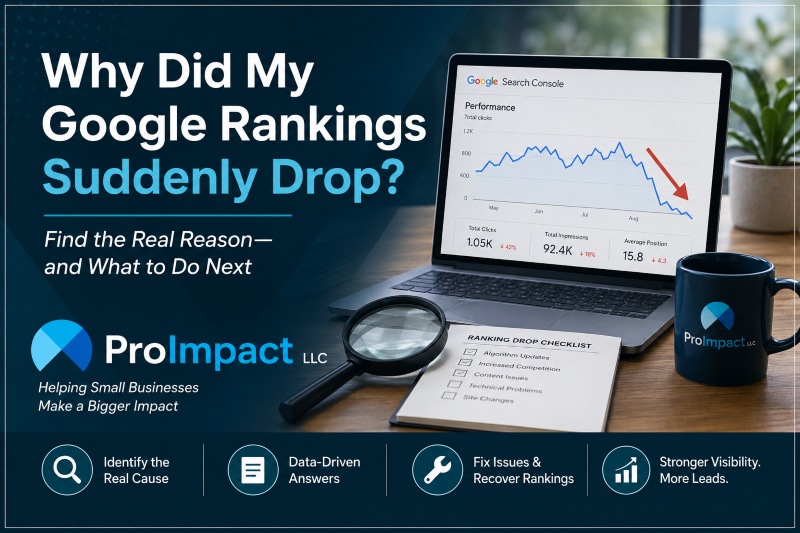
Why did my Google rankings suddenly drop?
How often should a WordPress website be updated?
Does my business still need a website if people use AI?
Those are useful content opportunities because they reflect the way people actually research a decision. They also work naturally with both SEO and AEO. A well-written article can compete as a search result while also providing concise passages that directly explain the answer.
This does not mean every paragraph should be reduced to a robotic question-and-answer format. People still need context, examples, explanation, judgment, and enough detail to understand why an answer applies to them. The goal is clarity, not stripping the personality and usefulness out of the writing.
What Practical AEO Looks Like on a Small-Business Website
A small business does not need to rebuild its website around AI. In many cases, the most useful AEO improvements look remarkably similar to good editorial and SEO practices that should have been happening already.
Answer the Main Question Early
If an article asks a clear question, do not make the reader work through six introductory paragraphs before receiving an answer. Give a useful summary near the top and then provide the explanation, examples, and qualifications that make the answer valuable.
Give Important Services Their Own Pages
A dedicated page creates room to explain a service properly: what it is, who needs it, what problems it solves, how the business approaches it, and what someone should do next. That clarity helps visitors, search engines, and answer systems understand the subject.
Use Descriptive Headings
Headings should help someone understand what each section contains. Clever headings can work in the right context, but important explanatory pages usually benefit from language that clearly identifies the subject being discussed.
Create Useful Connections Between Pages
An article about declining rankings should connect naturally to SEO services or a website review. An article about WordPress maintenance should connect to hosting and support. Internal links help visitors continue their research while also showing how the website's subjects relate to one another.
Be Specific Instead of Generic
“We provide great service” tells very little. Specific information about the work, process, service area, experience, common problems, customer questions, and practical recommendations gives both people and machines something meaningful to understand.
Keep the Technical Foundation Healthy
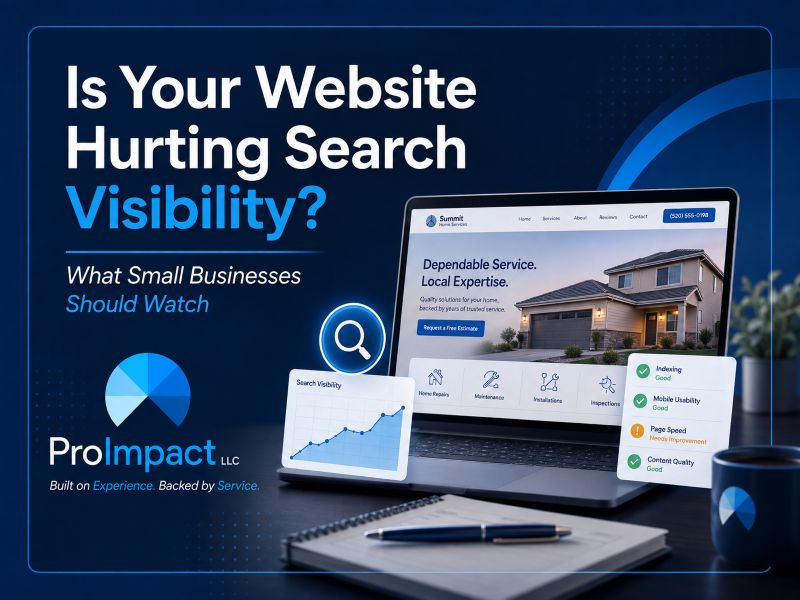
Content still needs a dependable website underneath it. Crawling, indexing, redirects, mobile usability, performance, schema, hosting, maintenance, and site structure remain important because useful information cannot help much if systems have difficulty reaching or understanding it.
Can AEO Guarantee That ChatGPT or Google Will Mention Your Business?
No. Just as an SEO company cannot legitimately guarantee a specific organic position, nobody can honestly guarantee that an AI system will consistently mention, recommend, or cite a particular business.
The systems generating these answers can use different sources, retrieve different information, interpret questions differently, and change over time. The wording of the user's question also matters. A broad informational question may produce one group of sources, while a local commercial question can produce something very different.
The practical goal is therefore to improve the likelihood that the business can be understood and considered. That means publishing accurate, useful information; clearly defining services and locations; building a coherent body of supporting content; maintaining sound technical SEO; and strengthening the broader credibility of the business online.
That is a more durable strategy than trying to reverse-engineer one answer from one AI platform.
What Should a Small Business Do Differently Now?
For most established small-business websites, the answer is not to abandon the current SEO plan and start buying a separate “AEO package.” It is to look at whether the existing website is genuinely useful and understandable.
Are the important services clearly explained? Are customer questions being answered? Does the blog support the services that matter to the business? Are related pages linked together? Is the business location clear? Are older pages still accurate? Can search engines crawl and index the important content? Does the site offer enough real information to distinguish the business from a generic template?
If those fundamentals are weak, they should be corrected regardless of whether the visitor arrives through Google, Bing, an AI-generated answer, a referral, or a direct recommendation.
If you are not sure whether your website has that foundation, a practical website review can help identify weaknesses in content, page structure, internal linking, indexing, calls to action, performance, and the broader organic SEO setup before you invest in a new strategy.
Common Questions About SEO and AEO
Is AEO replacing SEO?
No. AEO builds on many of the same fundamentals as SEO, including crawlable pages, useful content, clear structure, topical relevance, internal linking, and trustworthy information. The difference is that AEO also considers how clearly that information can be used in a direct answer.
Do I need separate content for SEO and AEO?
Usually not. A strong page can support both when it answers the searcher's question clearly while also providing enough depth, context, structure, and relevance to compete in organic search. Creating duplicate “AI versions” of existing pages is generally unnecessary.
Does schema guarantee that a page will appear in an AI answer?
No. Structured data can help systems understand specific information and page relationships, but schema does not guarantee rankings, citations, AI mentions, or recommendations. It should support accurate, useful content rather than substitute for it.
Should a local business still care about traditional Google rankings?
Yes. Traditional organic search remains an important source of visibility and website traffic, particularly when someone is actively comparing local services or is ready to contact a business. AI-assisted search adds another discovery path rather than eliminating the existing ones.
Make Your Website Easier to Find — and Easier to Understand
ProImpact helps small businesses strengthen the website itself through clearer service pages, useful content, practical organic SEO, internal linking, metadata, schema, technical improvements, and ongoing website support. The goal is not to chase the latest acronym. It is to build a stronger online foundation that can support the ways customers search today.