
Website Support for Small Businesses: Who Takes Care of It When Something Goes Wrong?
When I build and manage a website for a small business, I don't expect the owner to learn how WordPress works. They already have a business to run. My job is to take care of the website so they don't have to think about what is happening behind it every day.
Most of the time, that means the website simply does what it is supposed to do. Customers can find the business, learn about its services, complete a form or make a phone call while the owner concentrates on running the business.
Of course, websites don't remain unchanged just because nobody is sitting at the keyboard. WordPress and the software behind the website are updated, browsers change, security requirements evolve, and email providers change the way they handle messages. Most of those changes happen without the business owner ever knowing about them, which is exactly how it should be.
The owner doesn't need to know every time something changes behind the scenes. What matters is that someone responsible for the website does.
When Something Doesn't Work, What You See May Not Be the Problem
Every so often, a client will call or email because something doesn't seem right. Maybe a customer said a form didn't work. A page looks different. The website seems slower than usual. From the business owner's point of view, that is really all I need to know to begin looking into it.
The important thing is that the problem they noticed may not be where the problem actually is.
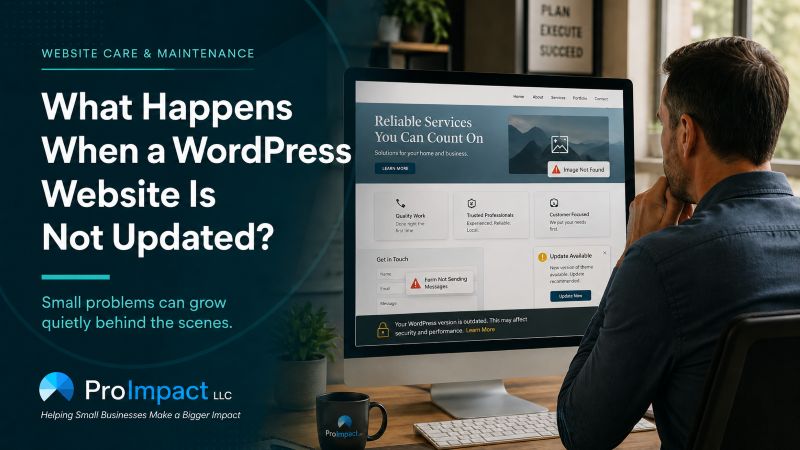
A contact form is a good example. Someone can complete the form, click Submit and receive a confirmation that the message was sent. The form may have worked exactly as intended. But if that message never reaches the business owner's inbox, it certainly doesn't feel like it worked.
The problem could be the form, but it could also be somewhere between the website and the receiving email account. If I immediately start changing the form because that is where the problem appeared, I may be working on something that wasn't broken in the first place.
What you see on the screen may only be the symptom. Good troubleshooting means finding the actual cause before making changes that could create another problem.
That is why troubleshooting a business website starts with understanding how the different pieces work together. The goal is not simply to make the visible problem disappear. It is to find the actual cause.
Knowing the Website Changes the Starting Point
There is a real advantage when the person troubleshooting the problem is also the person who has been managing the website.
I'm not meeting the website for the first time after something has gone wrong. I know where it is hosted, how it was built, what has been updated and what changes have been made along the way. That history gives me a much better starting point when something suddenly behaves differently.
It also helps me recognize whether the problem is isolated or whether it may be pointing to something larger. A small error may be just that — a small error that can be corrected. But sometimes the problem is the first sign that an older plugin, theme or another part of the website is beginning to create compatibility problems.
Knowing the difference matters because the objective is not just to fix today's problem. The objective is to make sure the website continues doing its job after the repair is made.
Website Support Is More Than Fixing Something That Breaks
This is where website support and website maintenance come together.
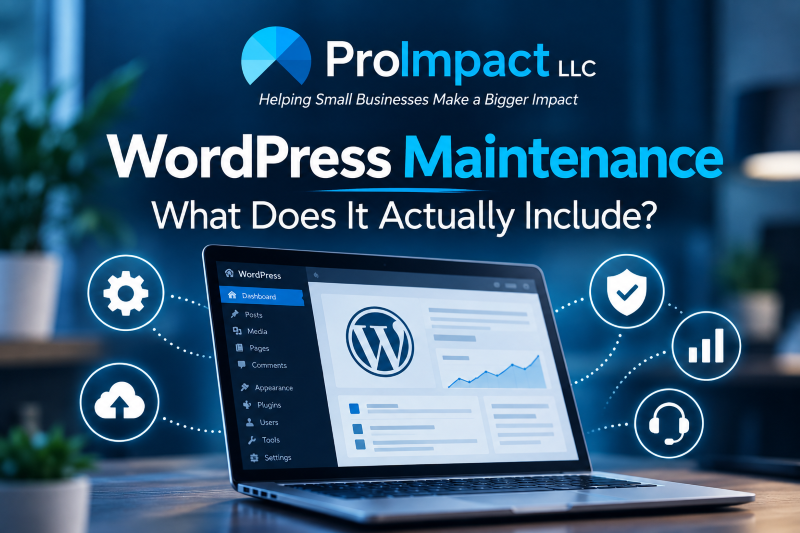
Maintenance is the work that happens in the background to help keep the website dependable. Updates are handled, backups are maintained, security is monitored, hosting is managed and the website is checked so small problems are less likely to become larger ones.
Support is what happens when something still goes wrong.
No website can be guaranteed to operate forever without an occasional problem. Software changes. Hosting environments change. Third-party services change. Sometimes one update affects something else in a way nobody could reasonably predict.
The value of ongoing support is that there is already someone responsible for the website when that happens. There is no need to start searching for a developer who has never seen the site before, explain how it was built or hope they can figure out what changed.
That continuity makes a difference, especially for a small business where the website may be responsible for phone calls, appointment requests, quote requests or other leads.
The Website Should Support the Business, Not Become Another Job
A business website is there to help the business operate and grow. It should not become another responsibility the owner has to manage every week.
The owner should not have to remember whether WordPress needs updating, whether a plugin is still supported, whether the website has been backed up or whether a security issue needs attention. Those are part of managing the website.
The same is true when something breaks. A client should be able to tell me what they noticed and then get back to running the business. From there, it is my responsibility to determine what happened and what needs to be done.
That is the relationship I want with my clients. They know their businesses. I know their websites.
Focus on Your Business. I'll Take Care of the Website.
Your website should support your business without becoming another job for you to manage. ProImpact provides ongoing WordPress support, maintenance and hosting, so the technical side of the website is taken care of and problems can be handled when they come up.
You run the business. I'll take care of the website.
Talk to ProImpact About Website Support